
Original submission details
Original title: A bet I lost
View original KEATS context ↗ (university access required).
4.9 Discussion_ marketing game
Share your results from the game by posting the screengrab of the result page and explain why you allocated your budget in the way that you did.
Course task reproduced as context. The response below is Fiona’s independent academic work. KEATS source ↗ (university access required).
Explore writing on this question ↗I actually failed the simulation the first time, which was annoying because I thought I had spread the budget quite well. Then I bet my husband, who is a Market Risk Analyst, that he would not be able to do better. He then completed it in about 10 minutes and somehow got 4/4 achieved. So this is basically what happened and what I learned from it.
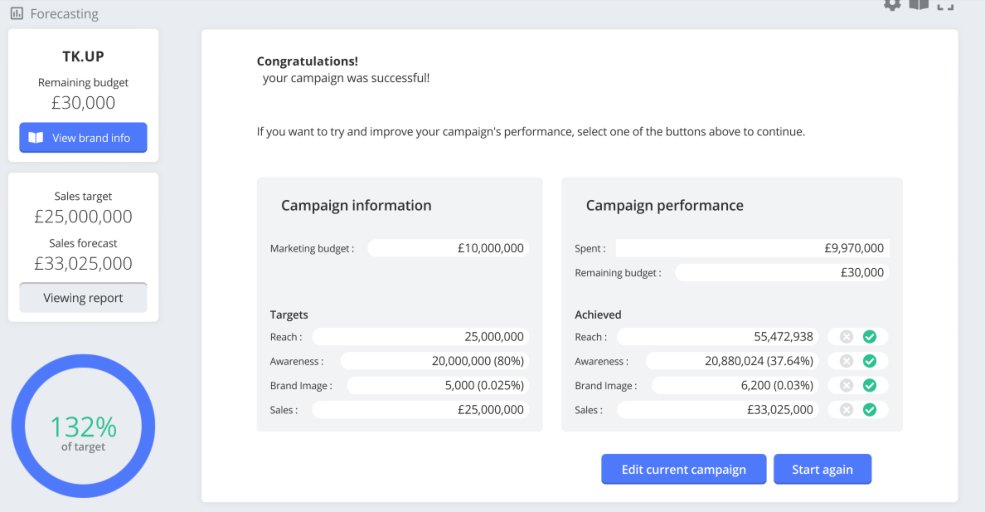
The final campaign achieved all four objectives, with £30,000 still remaining from the £10 million budget. Reach came to 55,472,938, which was far above the target of 25,000,000. Awareness also exceeded the target at 20,880,024, while brand image reached 6,200 and sales reached £33,025,000, both above the required levels. Overall, the campaign achieved 132% of target, which showed that the final media mix was much stronger than my original attempt.
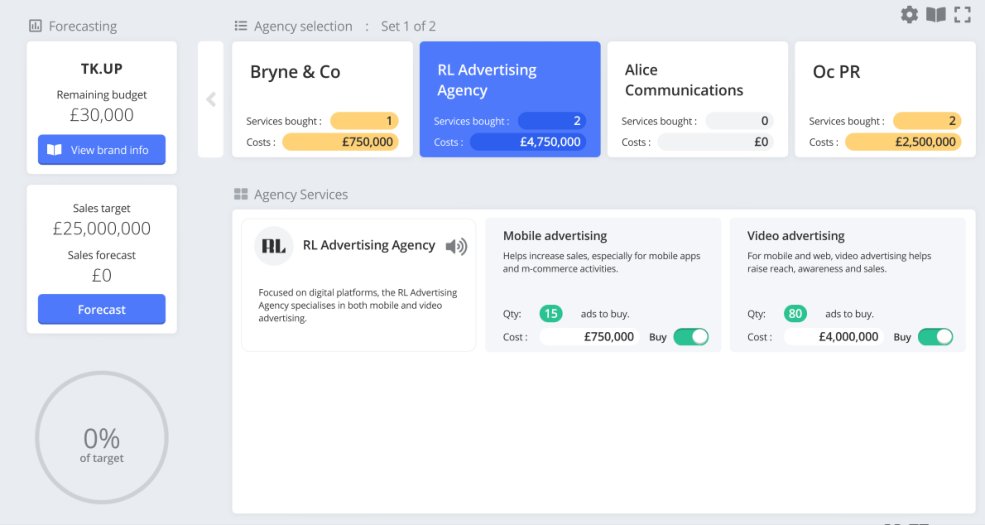
What stood out most was that the successful campaign did not try to do everything. My first instinct had been to spread the budget too widely, but this version was much more selective and focused on channels that could work across more than one objective. A large share of the budget went to video advertising and mobile advertising through RL Advertising Agency. That made sense because video can support reach, awareness and sales at the same time, while dynamic advertising is also particularly useful for attracting and directing attention (Wooley et al., 2022). This fits with the wider idea that effective campaigns need to balance short-term response activity with longer-term brand-building rather than over-relying on one side only (Binet & Field, 2013).
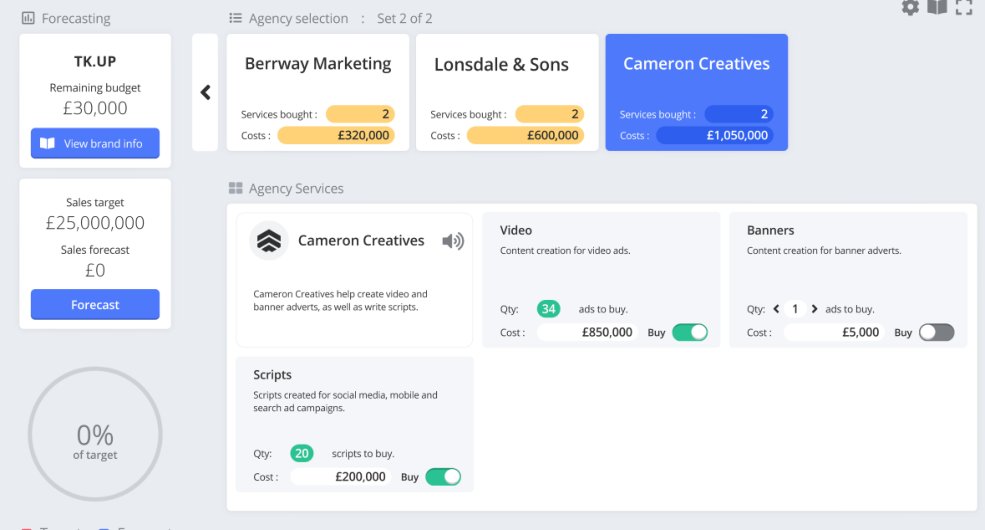
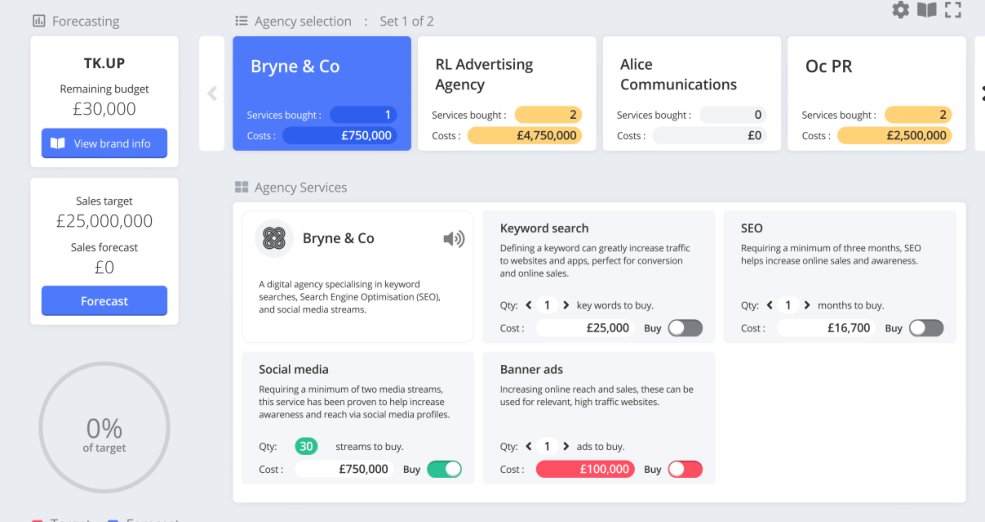
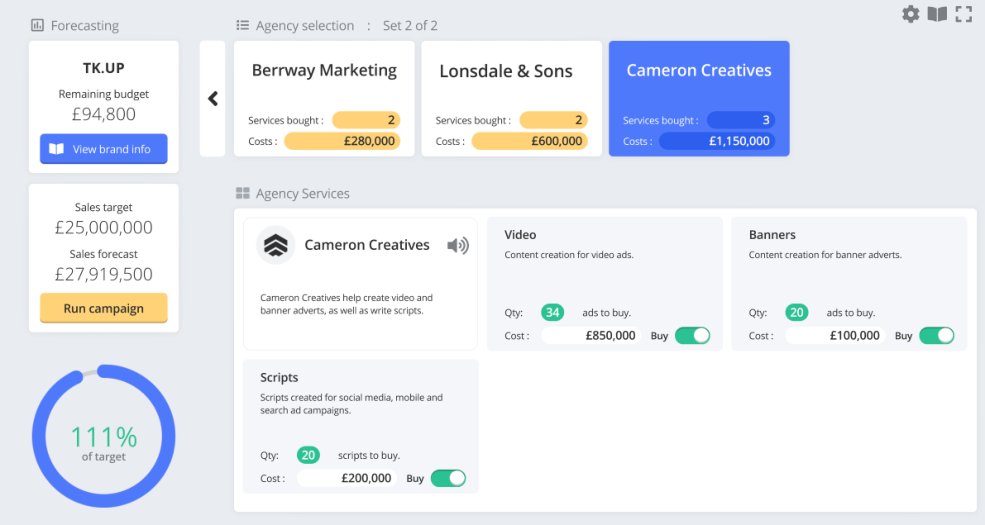
That was then supported by video content and scripts from Cameron Creatives, which helped keep the message more consistent across the campaign. There was also investment in social media streams through Bryne & Co, which helped increase exposure and awareness at a relatively low cost. At the same time, the simulation also showed that simply repeating or adding more activity does not always keep improving results. This reflects the idea of effective frequency, where repetition can strengthen recall and brand response up to a point, but needs to be managed carefully rather than endlessly increased (Schmidt & Eisend, 2015).
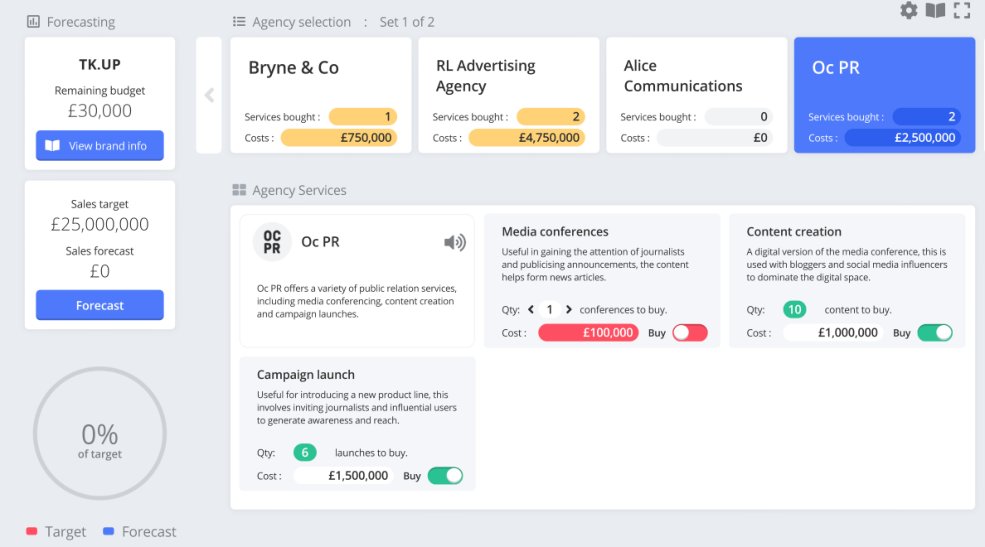
Because TK.UP had the overheating issue, the campaign also needed to rebuild confidence rather than just push sales. That is probably why campaign launches and content creation through Oc PR were included. In a brand crisis, media coverage and public perceptions can have a strong effect on trust, so communication has to do more than generate visibility; it also has to protect and restore credibility (Yannopoulou et al., 2011). I think this is why the PR and content side of the campaign mattered so much for improving brand image. It also makes sense from a storytelling perspective, as branded content can support cognitive, emotional and behavioural engagement when audiences connect with the message (Dessart & Pitardi, 2019).
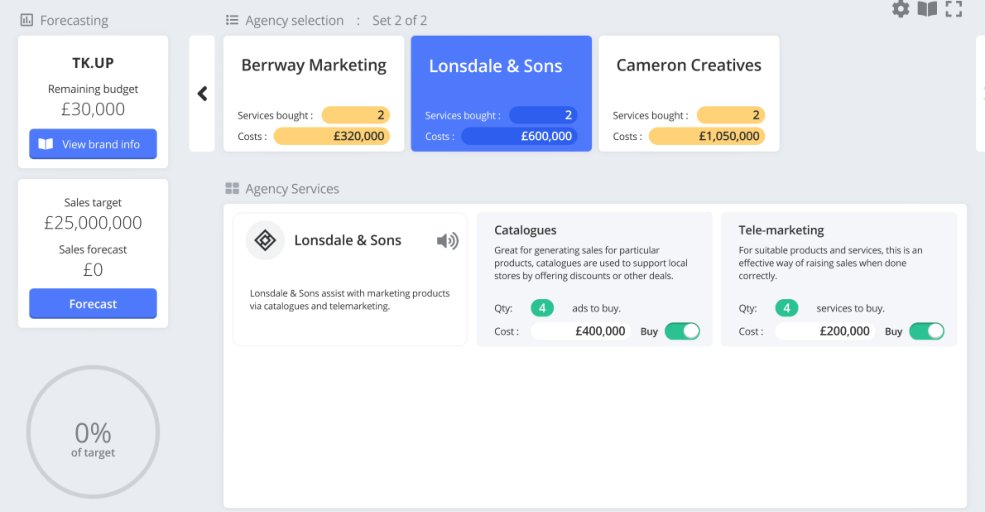
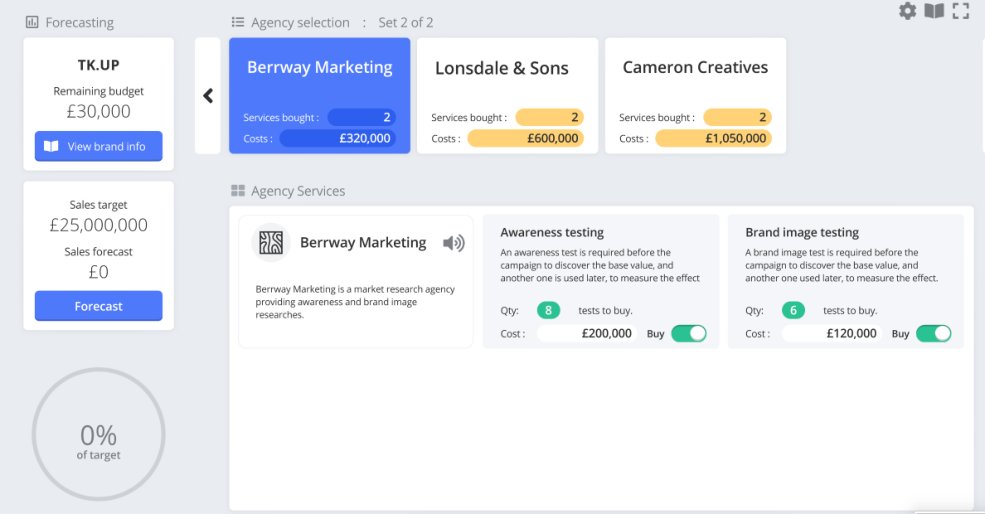
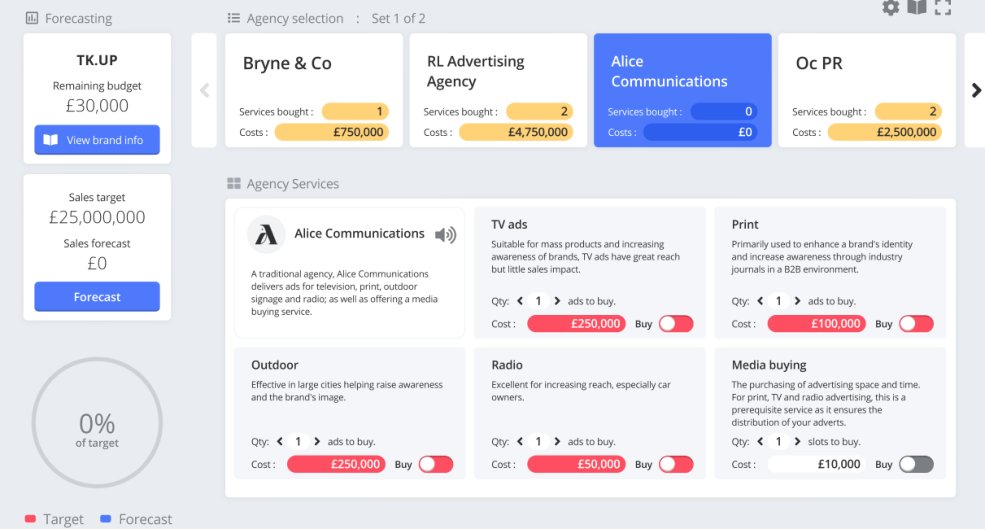
At the same time, catalogues and telemarketing through Lonsdale & Sons helped strengthen the sales side of the campaign. So the overall mix was not only about visibility, but also about trust and conversion. Another useful part of the strategy was the inclusion of awareness testing and brand image testing through Berrway Marketing. That shows a more measured approach, because awareness and image do not automatically improve just because reach is high.
The biggest lesson for me was that effective IMC is less about spending more and more about spending in the right places. My failed attempt taught me that it is easy to overfocus on sales-led channels and assume the rest will follow. But this outcome showed that if the core brand problem is trust and perception, the campaign has to include channels that reassure as well as channels that convert. So, slightly annoyingly, my husband did win that bet. But he also proved a useful point: the strongest campaign was not the one with the widest spread of activity, it was the one with the clearest balance between reach, credibility, awareness and sales.
Images from the original
References.
- Binet, L., & Field, P. (2013). The long and the short of it: Balancing short and long-term marketing strategies. Institute of Practitioners in Advertising.
- Dessart, L., & Pitardi, V. (2019). How stories generate consumer engagement: An exploratory study. Journal of Business Research, 104, 183–195.
- Schmidt, S., & Eisend, M. (2015). Advertising repetition: A meta-analysis on effective frequency in advertising. Journal of Advertising, 44(4), 415–428.https://doi.org/10.1080/00913367.2015.1018460
- Wooley, B., Bellman, S., Hartnett, N., Rask, A., & Varan, D. (2022). Influence of dynamic content on visual attention during video advertisements. European Journal of Marketing, 56(12), 3346–3367.https://doi.org/10.1108/EJM-10-2020-0764
- Yannopoulou, N., Koronis, E., & Elliott, R. (2011). Media amplification of a brand crisis and its affect on brand trust. Journal of Marketing Management, 27(5–6), 530–546. https://doi.org/10.1080/0267257X.2010.498141
Archive notes
Some embedded material is omitted where it contains personal details, other people’s writing, or no article content. Available article images are shown with source captions.