
Original submission details
Original title: YOLO! Don’t get FOMO! Get Aphra.
View original KEATS context ↗ (university access required).
5.9 Developing new product development ideas
Research some new product ideas or simply consider the new products that you’ve seen recently. Do you think that any of them will find a sustainable market?
Upload pictures or include a link to the products in the forum and discuss why you think these products were successful or unsuccessful.
Course task reproduced as context. The response below is Fiona’s independent academic work. KEATS source ↗ (university access required).
Explore writing on this question ↗Life is messy. It’s not just work tasks or grocery lists — it’s everything, all at once. It can be a cosmic joke. I was psyched to hear about Aphra. My buddy Charlie H saw the gap — people overwhelmed not just by work, but by the sheer volume of life. It excited me enough to want in from the beginning.
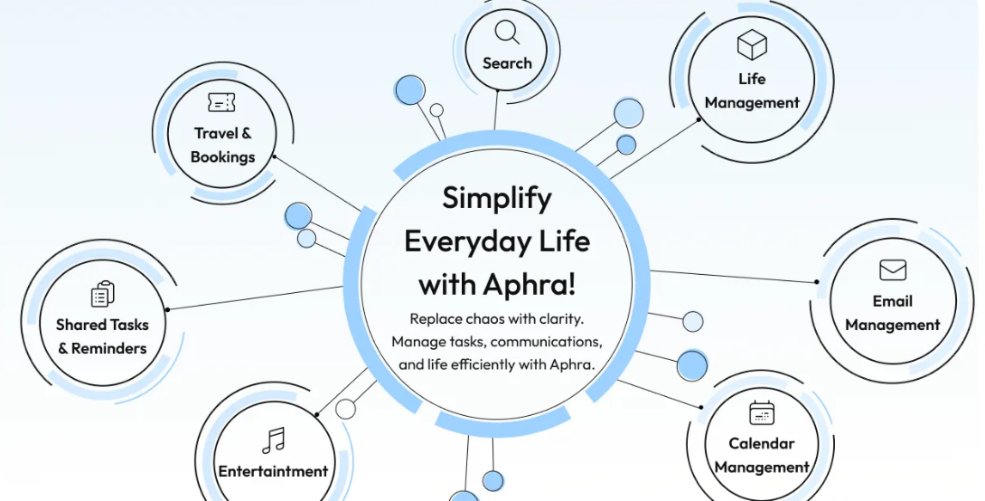
Aphra is an AI assistant that doesn’t just manage your calendar — it helps manage you. It tracks your tasks, your energy, your stress, and even your emotional load. It’s the first assistant that recognises you’re a full human being — not a machine trying to “optimize” your life one alert at a time.
From a marketing perspective, I think Aphra is set up for long-term success. Why? • Market orientation (Narver & Slater, 1990): It was built with real user input from day one. People’s actual problems shaped this product.
• Jobs-to-Be-Done (Christensen et al., 2016): People aren’t hiring Aphra to just get stuff done. They’re hiring it to feel in control again.
• Technology Acceptance (Davis, 1989): Simple, intuitive, useful — people will actually use it.
• Emotional branding (Gobe, 2009): It doesn’t stress you out — it supports you. And that makes people come back.
• Diffusion of Innovation (Rogers, 2003): Aphra nails all five traits for adoption — especially relative advantage and simplicity.
• Blue Ocean Strategy (Kim & Mauborgne, 2005): It’s not competing with to-do list apps — it’s creating a new category altogether: life intelligence. This is the same user base that made Headspace a breakout success — busy, digitally-savvy people who don’t just want tools… they want clarity. Aphra hits the same emotional nerve, but goes further by helping manage the actual chaos.
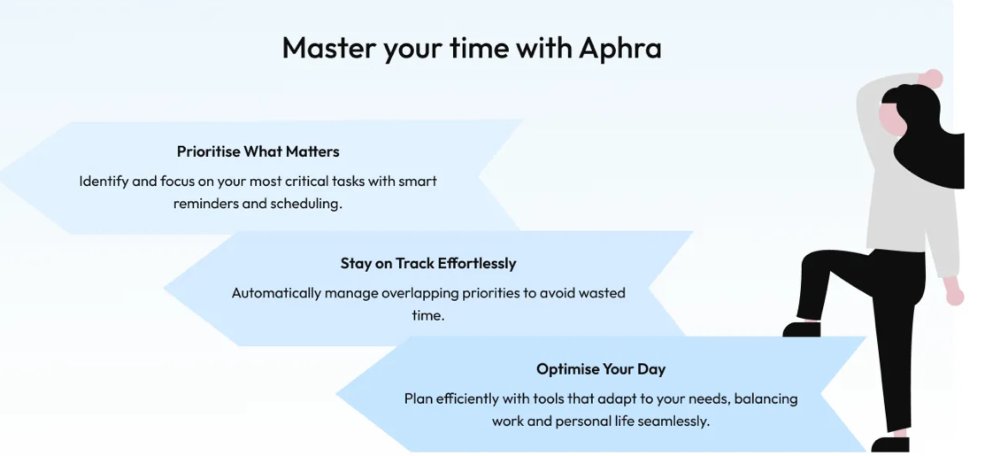
Aphra doesn’t help you do more. It helps you do what actually matters — with less stress and more sanity.
And if you’ve ever stared at your calendar and thought “absolutely not”…
Yeah. It’s time.
Aphra exists because the market has evolved — and so have people. There are apps galore managing work; none managing life overload. This product fills a glaring gap: the need for intelligent, emotionally aware, and adaptive support in a world where traditional productivity tools fall short. The innovation behind Aphra is an opportunity and necessity. People are asking for more than task management; they’re asking for clarity, calm, and systems that understand them as whole humans.
What makes Aphra’s success inevitable, is its alignment with key market trends: the demand for emotionally intelligent tech, the rising fatigue with hustle culture, and the growing expectation that digital tools should support—not sabotage— wellbeing. Backed by strong theoretical foundations, a clearly defined audience, and a sharp strategic position in a category of its own, Aphra isn’t just entering the market. It could reshape it if done well.
I believe Aphra has a place, because innovation was necessary, because existing solutions weren’t enough.
And it will succeed, because it solves the problem so many of us are already living.
(See comments for my references)
Images from the original

References.
- No references were listed in the original contribution.