
Original submission details
Original title: 👣 🦶 🚶♀️ 📱 🔋 📦 ⚡Walking the Real Cost of a Smartphone: A Barefoot Reflection on the 4Ps 🌍 🌱 ♻️ 🌿 🔄 ⚖️
View original KEATS context ↗ (university access required).
1.5 Challenges to the marketing discipline
How do the 4Ps conflict with ideas of sustainability and ethics? In what ways could a company’s drive for profit via products, pricing, promotions and placement strategies be harming the environment and go against ethical practices? Share your thoughts in the discussion below.
Course task reproduced as context. The response below is Fiona’s independent academic work. KEATS source ↗ (university access required).
Explore writing on this question ↗Original response
Submitted · 3:59 PM👣 🦶 🚶♀️ 📱 🔋 📦 ⚡Walking the Real Cost of a Smartphone: A Barefoot Reflection on the 4Ps 🌍 🌱 ♻️ 🌿 🔄 ⚖️
Marketing always makes things look smooth and easy. The opposite repels people. A rush of unboxing, dreamy imagery, flashy tech, and suddenly you are convinced you deserve it or need it or are falling behind without it. So it goes click, buy, next-day delivery, endorphin hit, repeat, upgrade. That is literally what marketing is designed to do right now, stimulate demand and normalise consumption (Chartered Institute of Marketing, 2023).
Last night my husband told me he needs a new phone because his current one will not update anymore. Other than that, it is eight years old and in great condition. He is basically forced to buy a new one. Between you and me, I think he also loves the permission this gives him to get a shiny new toy.
That illusion cracked for me, like my screen, the day my family and I went to GeoFort in Herwijnen, Netherlands and were told to take our shoes off and walk a loooooong barefoot trail representing the journey of a smartphone from raw material to disposal. What hit me was how long it was, how uncomfortable it became, and how eye-opening it was. It was immersive marketing, but instead of selling a product, it sold awareness. The exhibit shows the process and materials used in phones and makes you physically experience every stage (GeoFort, n.d.).
From the start the ground was rough. Sand, rocks, metal fragments, rubber, then broken glass. Uncomfortable enough that you had to slow down and think about every step. The opposite of how buying a phone feels. Along the path were visuals of land scarred by mining and people affected by extraction. That moment made me realise the material inside a phone is not as clean-cut as marketing makes it seem. It is energy intensive, earth intensive, and human intensive, and honestly a riot against pretty much all 17 UN Sustainable Development Goals (United Nations, 2015). And yet no, I am not giving up my iPhone, just feeling more aware and slightly guilty.
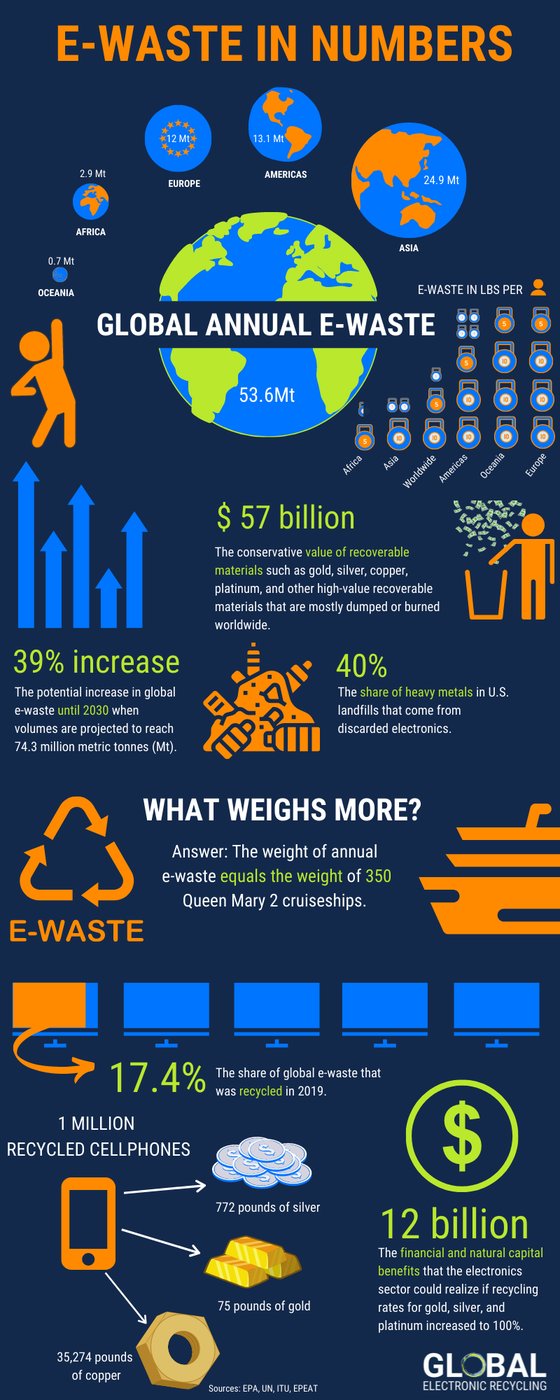
What I was walking on were the materials that make a smartphone and its packaging. Phones are some of the most material-rich products we own and far more complex than marketing suggests. They can contain over 60 elements, including precious and hazardous metals, copious amounts of our limited fresh water, which raises ethical questions around extraction and disposal (European Commission, 2020; ITU & UNITAR, 2024). A lot of the footprint does not even come from the phone itself, but from how it is presented and packaged, creating waste before you even see the gadget.
Phones typically contain lithium, cobalt, nickel, copper, gold, silver, palladium, tin, tungsten, rare earth elements, silicon, aluminium, and glass (Andrae, 2016), and are shipped back and forth around the world at different assembly stages. They are metal-rich but difficult to recycle, which is why e-waste keeps growing globally (ITU & UNITAR, 2024).
And then there is the packaging. Cardboard, inks, coatings, plastic trays, adhesives, protective films. All part of the premium unboxing experience. These materials are not purely functional but exist because marketing research shows packaging increases perceived value and willingness to pay (Underwood & Klein, 2002). Most of it is thrown away within minutes.
That barefoot walk made the conflict between marketing and sustainability very real, especially when you look at the 4Ps.
Product Marketing pushes constant upgrades, YOU need a New camera, YOU need Faster processor, IT’S much better to have a Slimmer design. To make matters worse Phones are often designed with sealed parts and limited repairability, making replacement feel normal and necessary, exonerating you from culpability. This increases resource extraction and energy use and goes directly against sustainable product design, which could focus on durability and full life-cycle thinking instead (European Commission, 2024). Boy does Marketing make it a rush when you get a new phone.
Price Marketing makes you feel like you got a deal! Pricing strategies hide the real environmental cost. Trade-in offers and upgrade plans make new phones feel affordable, but the price does not reflect extraction damage, labour conditions, or waste management. That gap is not just economic but ethical, because environmental harm is externalised while profits stay internal (Raworth, 2017). No boy wants a financial buzz kill.
Promotion Marketing Promotion is built to stimulate desire. You see phones unboxed perfectly, as if they arrived from nowhere rather than from global mining and manufacturing systems. Sustainability claims often focus on recycled cardboard or efficiency gains, which are small pieces of a much bigger story. Research shows that this selective storytelling can mislead consumers and drift into greenwashing, even when claims are technically true (Delmas & Burbano, 2011). All we wanted was permission and this gives it to us and helps us sleep at night.
Place Place decisions prioritise speed and convenience. Next-day delivery and constant availability increase transport emissions and packaging use. That ease of purchase is central to modern marketing, but it also increases environmental pressure behind the scenes (European Environment Agency, 2023). Amazon came to my house 4 times today with things from all around the world that I ordered last night! 😮 The message from GeoFort seems to have worn off with time and convenience. Oops.
Walking barefoot made it impossible to ignore how far comfort is removed from real cost. The classic marketing definition about satisfying needs profitably sounds fine until profit depends on faster replacement cycles and hidden damage (Chartered Institute of Marketing, 2023). Maybe that definition is outdated. Maybe marketing should be about education about what are our needs? We need to not have to pick up the environmental bill down the line.
There are possible responses to this problem. Repairable, modular phones and refurbishment models extend product life and reduce the need for new materials. These approaches are increasingly supported by sustainability frameworks and legislation such as the EU Right to Repair and Ecodesign regulations, which aim to push marketing and product strategy away from disposability (European Commission, 2024). I would pay for that and get a feel good rush, wouldn't you?
That barefoot trail did something marketing can also do. It showed that sustainability can be a commodity for a buyer if it's marketed inside the decision process about product, price, promotion, and place it does not necessarily mean less profit but profit differently. If marketing can sell desire so effectively, it can also sell the desire to be honest about the real cost of creating it and still promote returns. Or with all this backpedaling in sustainability lately, am I being naive?
Images from the original

Follow-up response
Submitted · 1:01 PMRe: 👣 🦶 🚶♀️ 📱 🔋 📦 ⚡Walking the Real Cost of a Smartphone: A Barefoot Reflection on the 4Ps 🌍 🌱 ♻️ 🌿 🔄 ⚖️
Thank you very much. This is genuinely something that I think about with every organization that I work with so if you have any ideas of how to do it, please do share cause it’s a hard one.
Follow-up response
Submitted · 1:05 PMRe: 👣 🦶 🚶♀️ 📱 🔋 📦 ⚡Walking the Real Cost of a Smartphone: A Barefoot Reflection on the 4Ps 🌍 🌱 ♻️ 🌿 🔄 ⚖️
Do you really think that that is actually the clue? That it lies behind the wants and needs? If so, how do you convince somebody they don’t need something? And which organization would ever pay a marketer to do that? We’re paid by people that wanna sell, have we as marketers sold our souls?
References.
- No references were listed in the original contribution.
Archive notes
Some embedded material is omitted where it contains personal details, other people’s writing, or no article content. Available article images are shown with source captions.