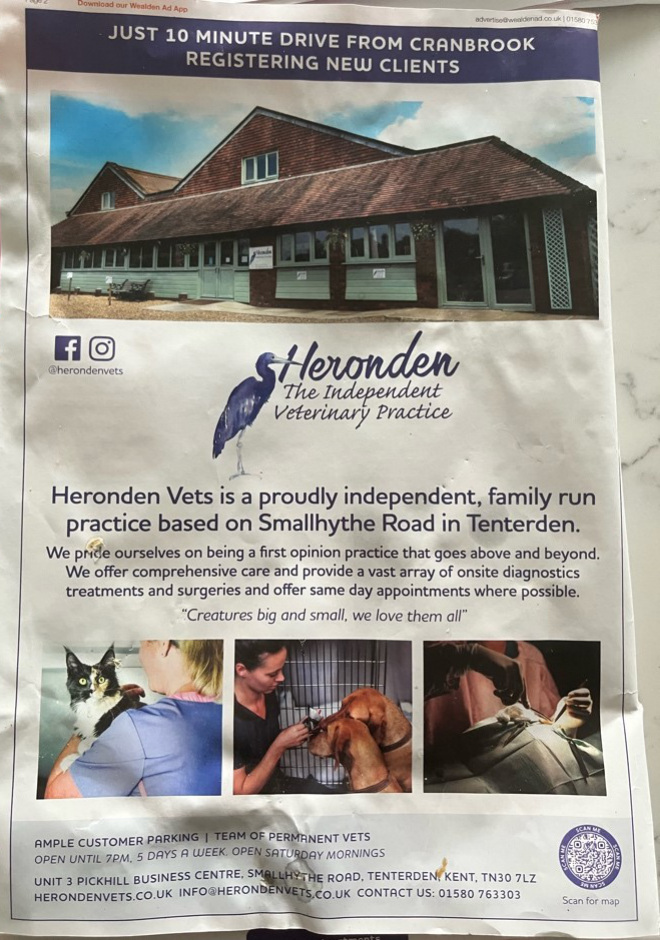
A veterinary advertisement has several jobs to do at once. It needs to communicate competence, make the practice feel approachable and give an owner a clear reason to act. A warm image is a beginning, not the complete message.
Looking at local veterinary advertising made me think about the balance between authority and connection. Professional expertise matters, but an owner also wants to know what the relationship will feel like. Can I ask a question? Will somebody explain the options? Will my concern be taken seriously?
I would use real stories with permission, clear language about the service and a practical invitation. “It takes a village to care for pets” is the kind of community idea I would explore, provided the experience behind it supports the words.
Digital connections could extend that invitation: a simple route from a printed advertisement to useful information, a local walking story or an introduction to the team. The purpose of a QR code is to help someone do something worthwhile, not merely to decorate the page with technology.
Cost and access also deserve plain language. Communication should help people understand the service and the choices available, with an invitation to discuss concerns. Reassurance becomes more credible when it includes practical information.
I would test what owners understand, what they remember and whether they can identify the next step. The most persuasive advertisement is one the practice can fulfil when the person arrives.