
Original submission details
Original title: The Red Cabin: The Exact Thought Process My Colleagues Will Go Through
View original KEATS context ↗ (university access required).
4.4 AccorHotels and the digital transformation
1. What are the different types of online content in the hotel industry (ie the main reasons why people post content, as well as the purposes they serve in guiding customers)? 2. What does the typical Accor customer journey look like, and how does content, in its various forms, affect the various stages of the customer journey? 3. How can Accor use content to attract customers to its website for booking, so that it does not have to pay the hefty 20 to 30 per cent commission fees demanded by OTAs like Booking.com?
Course task reproduced as context. The response below is Fiona’s independent academic work. KEATS source ↗ (university access required).
Explore writing on this question ↗Original response
Submitted · 6:36 PMThe Red Cabin: The Exact Thought Process My Colleagues Will Go Through
What does the typical Accor customer journey look like, and how does content, in its various forms, affect the various stages of the customer journey?
The Red Cabin: The Exact Thought Process My
Colleagues Will Go Through -https://theredcabin.co.uk/
by the time you finish reading this, you’ll all have gone through the five stages of Fiona plugging her friend’s Red cabin. Here’s how it plays out:
1. Awareness (👀 “OK fine, she keeps mentioning this… let’s look”)
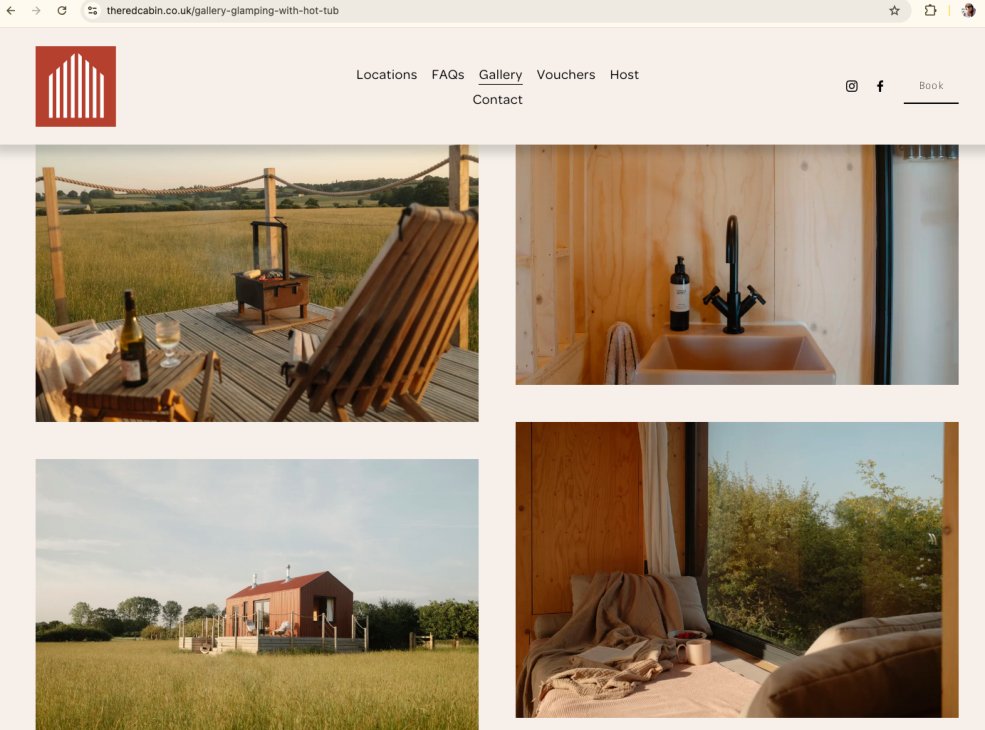
You’re sitting there thinking: “Why does Fiona keep bringing up this Red Cabin thing? Is this coursework or is she secretly on commission?” So you click the link. Photos pop up: woodlands, firelight, mugs of tea. It actually looks… cute? Not the murder shack you expected.
This is the attention stage : glossy reels, wholesome photos, the kind of cosy vibe that makes you wanna see more (Petrescu et al., 2020). 2. Consideration (🤔 “But wait, is this legit?”)
Now your inner sceptic kicks in: “Hold up. Am I about to get lured into a muddy field with a pile of dung?” But then you spot the reviews. People survived, thrived. Someone even claimed they had the “best sleep since 2003.” Fiona mentioned something about a “friends & family discount.” INTERESTING tell me more stage.
This is the trust-building stage. Reviews and testimonials kill the “horror movie in the woods” fear ;) (Filieri et al., 2021). 3. Conversion (💳 “Fine, Fiona, I’ll book it”)
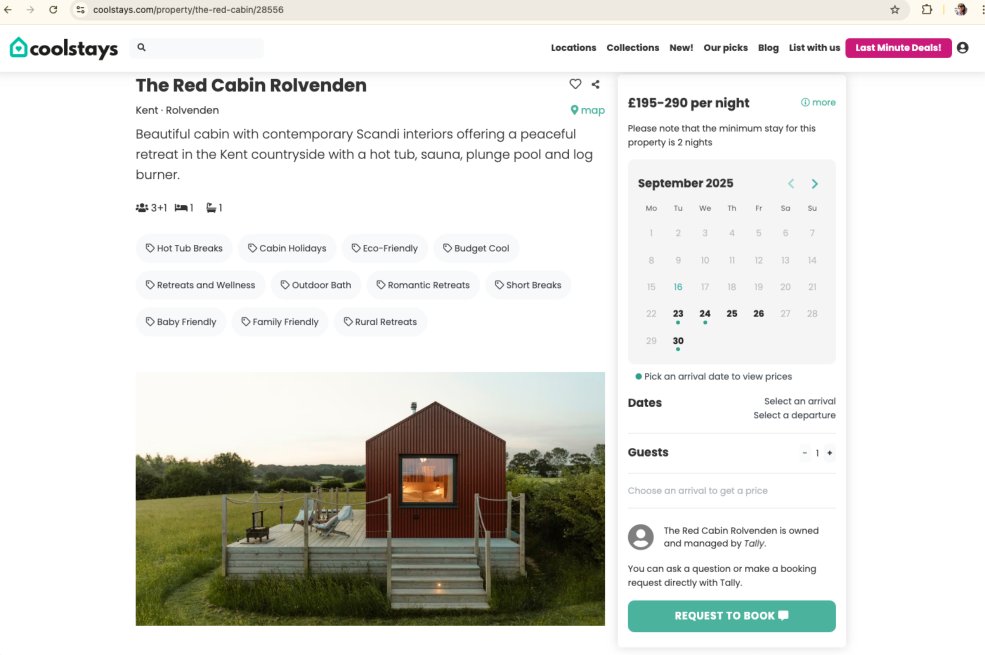
You’ve now reached the: “Alright, how much is it?” The website is clean. The “BOOK NOW” button is right there. If you book direct, you get free Food and cocktail basket with local goods that Fiona put there for you! > coolstays.com’s 30% commission. So you think "Lets do Fiona and the locals a solid and stick it to the man by booking directly and getting it for less", she will owe me one plus its a better deal..2 for 1.
Conversion content: clear CTAs, strong imagery, and cheeky perks that make you feel special(Chaffey & Smith, 2022). 4. Experience (✨ “Oh wow, she wasn’t lying”)
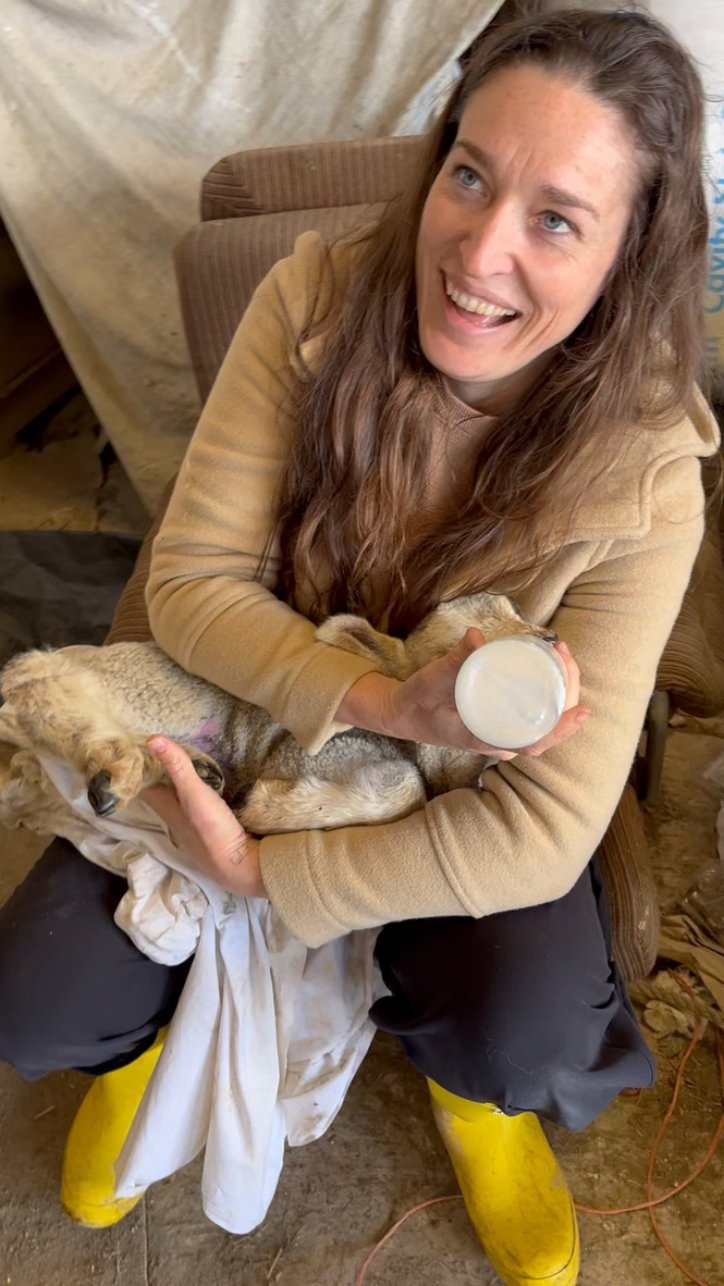
You arrive. The cabin is sooooo cosy, not creepy. Hot Farmer dude helped with the luggage and let you drive the Gator which Fiona filmed and you uploaded to insta and everyone you know laughed and commented how coool, no sketchy vibes. The stars, fire, and you tell yourself, your going to make it a tradition to come back every year and keep in contact with the farmer about how the lamb you helped is doing.
Guests become co-creators of content, part of the story the place, and want to help The Red Cabin with free marketing because you now care about eachother (Sigala, 2018). They took care of you and you want to take care of them back. A week later, an text lands: “Thanks for staying with us we hope you can visit again soon. We have a few open dates we would love to secure for you at a Friends and family rate.” You feel like you matter to them so yeah you look online and see hold on they also have a location by the sea! "I wanna try that" so you sign up and count the days and invited your friends to join.
loyalty loop(Lemon & Verhoef, 2016).
This is the customer journey for Accor aswell. Awareness → Consideration → Conversion → Experience → Loyalty. The Lamb just peed on me when the photo was taken!
Images from the original

Follow-up response
Submitted · 9:35 PMRe: The Red Cabin: The Exact Thought Process My Colleagues Will Go Through
Muchísimas gracias por tus comentarios, de verdad me vinieron en el momento perfecto. Estoy teniendo mucha dificultad con el papel que estoy escribiendo ahora; me cuesta tanto que me quedo dormida en mitad de la frase. Es tan seco, tan sin vida, que las palabras simplemente no me entran en la cabeza. En muchos entornos universitarios piden un tono objetivo e impersonal , pero esa exigencia de distancia puede volver el texto menos digerible para lectores reales (University of York, 2025; King’s College London, 2025).
Y quizá esa misma falta de alma sea lo que ocurre con algunas grandes cadenas como Accor. El desafío para estas marcas globales es que, en su intento de mantener coherencia institucional y respeto de marca, terminan sacrificando espontaneidad y emoción. En otras palabras, el tono “corporativo” puede sonar tan correcto que deja de sentirse humano. En comunicación, sabemos que el aprendizaje y la conexión emocional se potencian cuando el mensaje suena más conversacional y auténtico (Mayer, 2009; Mayer et al., 2004). El mismo principio aplica a la interacción entre marcas y consumidores: las personas conectan más con lo que sienten que proviene de una voz real, no de un protocolo.
Cuando escribo con un poco de humor o naturalidad, mis ideas fluyen mejor y creo que comunico más. No es frivolidad: la evidencia muestra que el humor bien usado aumenta la atención, el recuerdo y hasta la credibilidad (Banas et al., 2011; Ziv, 1988; Wanzer et al., 2010). Si trasladamos eso a Accor, el paralelismo es claro: si la marca encuentra una manera de reírse de sí misma con elegancia, de mostrar vulnerabilidad o humanidad, podría generar user-generated content (UGC) mucho más orgánico y afectivo. Las personas comparten lo que les hace sentir algo, no lo que simplemente cumple con la identidad visual de una marca.
Sin embargo, hay un matiz institucional importante. En contextos como el de Accor, existe la misma tensión que vivo en la escritura académica: el equilibrio entre mantener la seriedad y permitir humanidad. Algunas marcas temen que mostrarse demasiado humanas les reste autoridad, del mismo modo que los académicos temen que un tono más cálido les reste rigor. Pero los estudios sobre lenguaje claro demuestran que la accesibilidad y la emoción no debilitan el mensaje; lo hacen más comprensible y más recordable (BMJ Open, 2024; Government Digital Service, n.d.). Por eso, sí creo que grandes grupos como Accor podrían lograr ese tipo de UGC con alma, pero solo si se atreven a suavizar su voz institucional y a permitir más participación emocional de sus comunidades. Tal vez el problema no sea que las marcas grandes no puedan tener alma, sino que todavía escriben como algunos académicos con miedo a parecer poco serias.
References.
- No references were listed in the original contribution.
Archive notes
Some embedded material is omitted where it contains personal details, other people’s writing, or no article content. Available article images are shown with source captions.