
Starlink is a fascinating marketing case because the product and the personality are so difficult to separate. Satellite broadband offers a tangible answer to a connectivity problem. Elon Musk supplies something equally powerful but very different: attention. Launches, announcements and his public persona give the service a place in conversations far beyond the people actively shopping for broadband.
The question is what happens after somebody looks. Admiration for a technological ambition is not the same as confidence that a connection will work when a business, household or emergency service needs it. The star can bring people to Starlink. The service still has to make its own case.
This analysis treats the relationship between visibility and trust as a strategic question. Public traffic estimates do not establish Starlink's actual checkout conversion, customer acquisition cost or churn. Without access to transaction data, it would be misleading to declare that a specific percentage of attention fails to become a sale. The useful question is how an infrastructure brand can make the journey from curiosity to commitment more convincing.
A powerful source of awareness, with a different job to do
Founder visibility can give a brand an unusually distinctive identity. The founder becomes a recognisable shorthand for ambition, innovation and possibility. That is valuable in a crowded digital environment: being remembered is a prerequisite for being considered. Sharp's work on mental availability helps explain why attention matters, even though it does not tell us whether any particular visit produces a purchase.
Yet a broadband decision involves more than remembering a name. A rural household may be trying to solve an immediate coverage problem. A mobile worker may care about portability. An enterprise buyer may be considering continuity, support and operational exposure. A maritime or aviation customer has a different use case again. These are distinct decisions, even when the underlying technology is related.
The value proposition therefore changes with the customer's alternative. Where reliable terrestrial broadband is available, price and performance comparisons may dominate. Where alternatives are limited, availability can be the central benefit. Marketing that treats every visitor as an enthusiast for the same futuristic vision risks missing the practical problem that brought that person to the site.
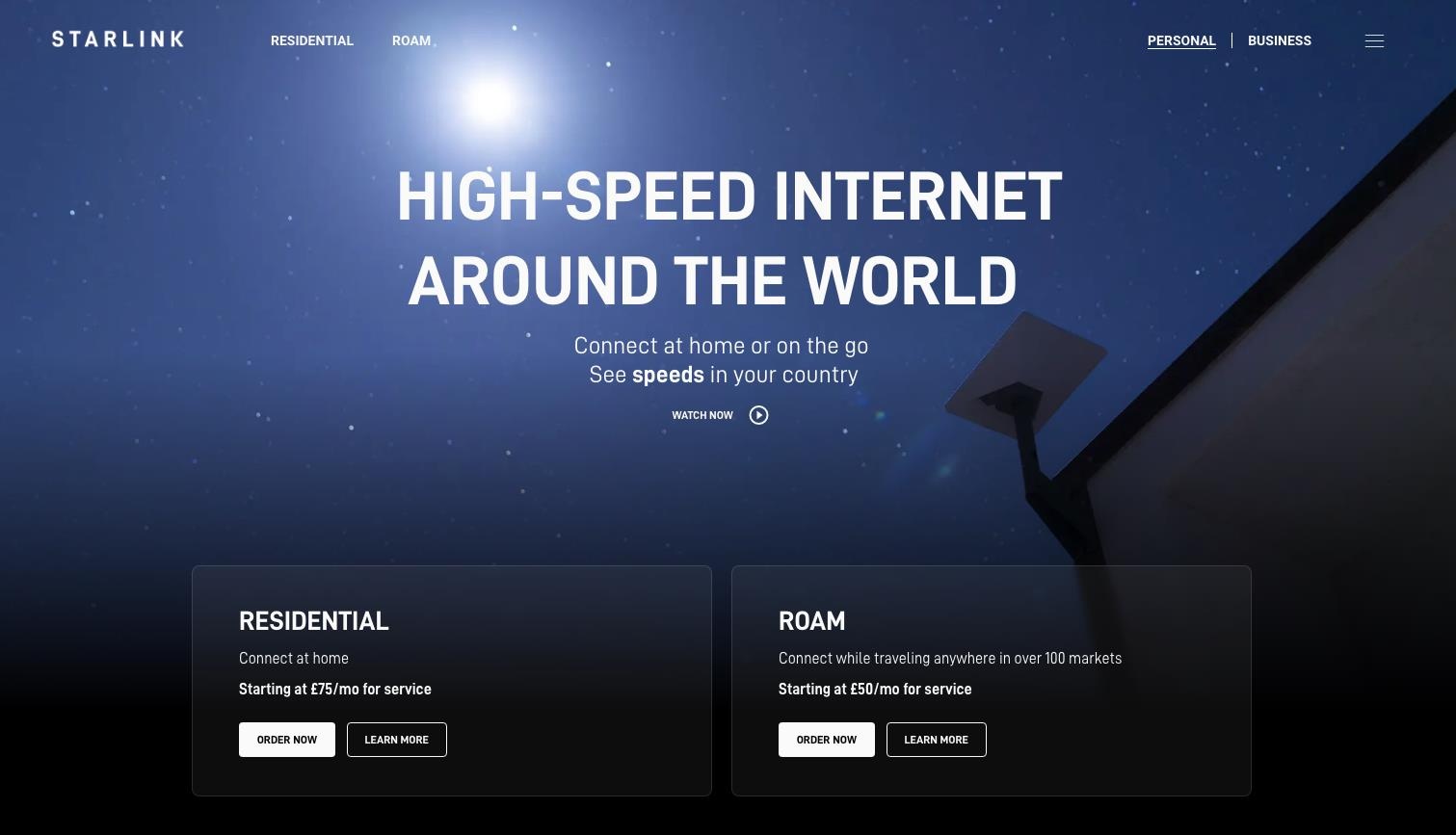
The point where appeal needs evidence
The customer journey is useful here because it separates jobs that are easily confused. Awareness asks whether people know the brand. Appeal asks whether they are interested. Evaluation asks whether the service fits their circumstances. Action asks whether the value and the terms justify committing. Advocacy asks whether the subsequent experience earns a recommendation.
Starlink's association with Musk is especially relevant to the first two stages. The later stages need answers: Is the service available at this address? What equipment is required? What performance should I expect? What will I pay over time? What happens when something goes wrong? A striking announcement cannot answer those questions on its own.
Petty and Cacioppo's Elaboration Likelihood Model provides a useful lens. People can respond to cues such as charisma and association, while also scrutinising the substance of an offer. It would be too simple to say that all broadband customers use one route and all fans use the other. The strategic point is that the closer a decision gets to a consequential purchase, the more useful accessible, relevant evidence becomes.
Davis's Technology Acceptance Model adds another consideration: perceived usefulness and ease of use. Technical novelty is not enough if the customer cannot see how the service will improve everyday life or understand what using it involves. Installation guidance, realistic performance explanations and clear support routes help translate an impressive system into a usable service.

When the founder becomes part of the purchasing risk
A highly visible founder gives a brand a human voice, but also creates an association the organisation does not fully control. People may encounter political commentary or controversy before they encounter product information. Different audiences can read the same public personality in very different ways.
That does not prove that controversy causes cancellations or reduces revenue. Those are empirical claims requiring evidence. It does create a question for brand management: can a customer trust the service on its own terms, even if their view of the founder changes? Institutional buyers, in particular, need to understand governance and continuity without having to infer them from a personal social media account.
The answer need not be to remove personality. It is to develop additional sources of authority. Engineers can explain performance. Service teams can explain recovery. Customers can describe specific deployments. Regional representatives can answer local questions. A brand becomes more resilient when its credibility rests on several visible, accountable voices.
Make proof part of the experience
Reliability evidence should be easy to find at the moment it matters. A prospective customer should be able to move from an availability check to an explanation of expected performance, equipment requirements and service limitations. Clear definitions matter: a typical speed, a peak result and a service commitment are different things.
There is already a useful distinction between publicity and technical explanation in Starlink's own communications. Its March 2024 latency update discussed engineering changes and reported median and worst-case latency separately. Its February 2025 satellite demisability update described its approach to deorbiting. These company publications demonstrate the form that operational evidence can take; they are not independent validation of every performance or environmental claim (Starlink, 2024, 2025).
The marketing opportunity is to make this kind of explanation legible to different audiences. A household does not need an engineering paper to understand whether video calls are likely to work. A procurement team may need considerably more detail. Layering concise answers over fuller documentation allows the same brand to serve both without replacing evidence with reassurance.
Incident communication belongs in that experience too. When any connectivity service is interrupted, customers need timely acknowledgement, a useful status update and a clear account of recovery. Communication does not remove an outage. It can reduce the additional uncertainty created when customers cannot tell what is happening or what to do next.
Local relevance and a credible price
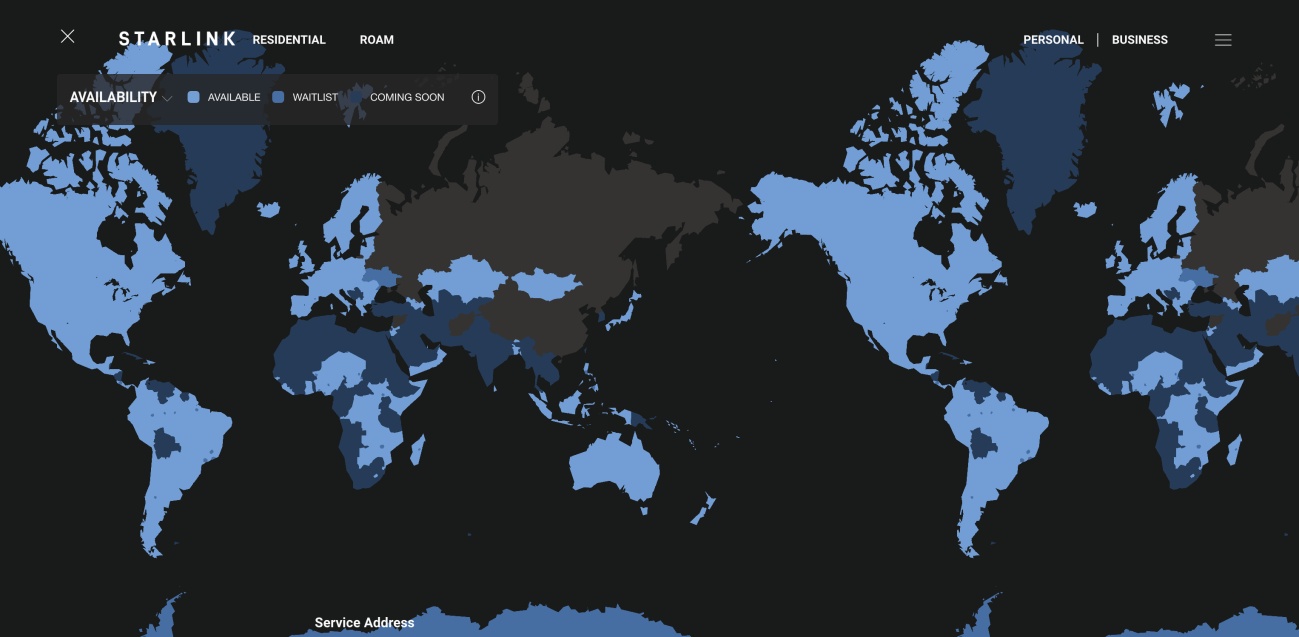
Trust is not a universal message that can simply be translated. Coverage, purchasing power, existing alternatives, language and support expectations differ by market. De Mooij's work on global marketing is a reminder to investigate these differences rather than assume one persuasive story will travel unchanged.
Localisation should therefore begin with the customer problem. Show the service in relevant conditions, explain local availability and make the full cost intelligible. Equipment charges, monthly fees and applicable conditions should be understood together. A lower headline price can encourage trial, but price changes alone cannot establish why the service is worth choosing.
Enterprise communication also needs a different balance. A real deployment can make an abstract capability concrete, provided the story distinguishes the customer's use case from a promise that every buyer will achieve the same result. Procurement evidence, service arrangements and implementation requirements should support the story rather than disappear behind it.
Measure the journey, not just the spectacle
The appropriate test is whether better information helps the right customers make an informed decision. That requires separating qualified enquiries from general curiosity, and identifying where people leave: before checking availability, while comparing plans, during checkout or after installation.
Traffic tools and search trends can suggest where to investigate. They cannot, by themselves, reveal the reasons for abandonment or substitute for transaction records. A short visit may mean confusion, an answered question or an unavailable service. Treating it automatically as distrust turns a behavioural observation into a story the data have not established.
A useful programme would connect journey research with controlled tests of clearer pricing, local proof, onboarding guidance and support information. Acquisition, retention and customer value would then be assessed using observed outcomes and the costs of providing the service. The objective is a stronger relationship between the promise and the experience, not simply a more flattering dashboard.
Starlink illustrates a broader challenge for founder-led brands: the person who makes a business impossible to ignore cannot perform every role in the customer relationship. Attention opens the door. The next conversation has to explain what the customer can rely on.
References.
- Davis, F. D. (1989). Perceived usefulness, perceived ease of use, and user acceptance of information technology. MIS Quarterly, 13(3), 319–340. https://doi.org/10.2307/249008
- De Mooij, M. (2019). Global marketing and advertising: Understanding cultural paradoxes (5th ed.). SAGE.
- Petty, R. E., & Cacioppo, J. T. (1986). Communication and persuasion: Central and peripheral routes to attitude change. Springer-Verlag.
- Sharp, B. (2010). How brands grow: What marketers don’t know. Oxford University Press.
- Starlink. (2024, March 7). Improving Starlink’s latency. https://starlink.com/ca/updates
- Starlink. (2025, February 27). Starlink satellite demisability. https://starlink.com/public-files/Starlink_Approach_to_Satellite_Demisability.pdf